
0%
Loading ...

For decades, MSFS East Africa has touched countless lives, nurturing hope and opening doors to new opportunities. We believe that every person deserves the chance to grow, learn, and thrive in a supportive environment.
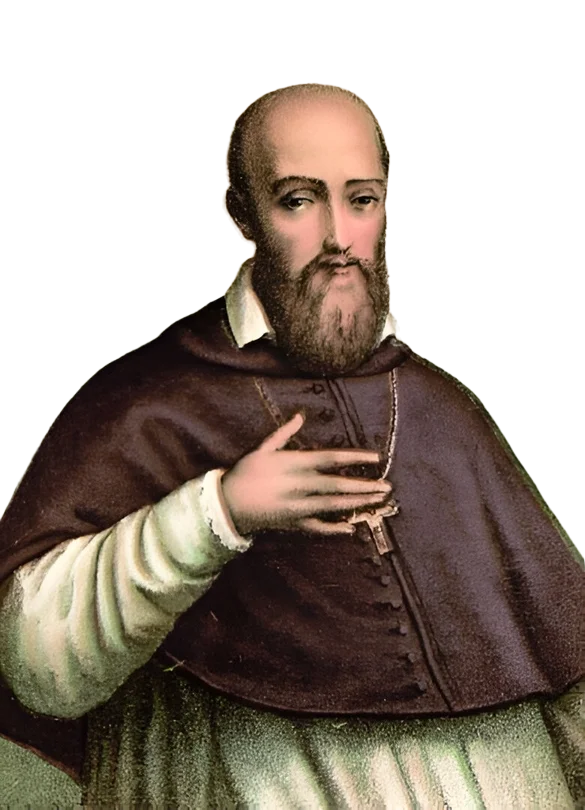
In 1593, he was ordained a priest and in 1594 he went to Chablais mission among the Calvinists. Although, he had many challenges and difficulties, including an attempted murder on him, he brought the whole district back to the Catholicism by prayers, penitence, writing and public debates. In 1602 St. Francis de Sales was appointed to be the bishop of Geneva. He was a good shepherd, a talented preacher and a spiritual guide for countless people. On 6 June 1610, he founded the “Order of the Visitation of Holy Mary”, together with Jane Frances de Chantal. St. Francis de Sales passed away at the age of 55 of cerebral haemorrhage at Lyons on 28 December 1622. He was buried on January 24th at Annecy. He was beatified in 1662 and was canonized in 1665. Pope Pius X declared him as the Doctor of the Church in 1877.
In him we find a marvellous fusion of two characteristics that are rarely seen together: astute thought and intense activity, all inspired by a spiritual life of extraordinary distinction. The brief summary of Francis’ life above shows clearly what was dominant in his life as pastor, priest and bishop. He died at a relatively young age: 55 years. He had been ordained priest at 26, after long and toilsome years of study at Paris and Padua. There were left to him only 28 years of ministerial activities: five as a priest, four as a missionary in the Chablais, and twenty as Prince-bishop of Geneva.
It should be realised that his service was intense and animated by the fact that he lived in a time fraught with complexities. His apostolic life was closely bound up in the policy of his prince, Duke Charles Emmanuel of Savoy, who wished to eliminate the religious dissensions rampant in his Duchy. However, in 1601, the Treaty of Lyons restored a part of the diocese of Annecy (Gex) to France, and this obliged consultation also with the French Government. Francis had to negotiate with political authorities (Henry IV and his courtiers), and religious authorities (the bishops); he also had dealings with some of the spiritual giants of the day (the extraordinary mystic Mme Acarie, Pierre de Bérulle, Vincent de Paul). Twice he was offered the archbishopric of Paris and he refused to accept it with humility.
Besides all this, he was the bishop of Geneva, but exiled in Annecy. He thus found himself at the centre of divergences between Catholics and Protestants, and the controversies raised by the Reformation. He laboured ceaselessly for reconciliation, for the spiritual return to unity of the faith in his episcopal city.
Our team of missionaries, educators, and volunteers is united by a shared vision: to create a just, caring, and empowered society.
Copyright © 2025. All rights reserved.
Powered by Insights IT solutions insightsitsolutions.co.uk